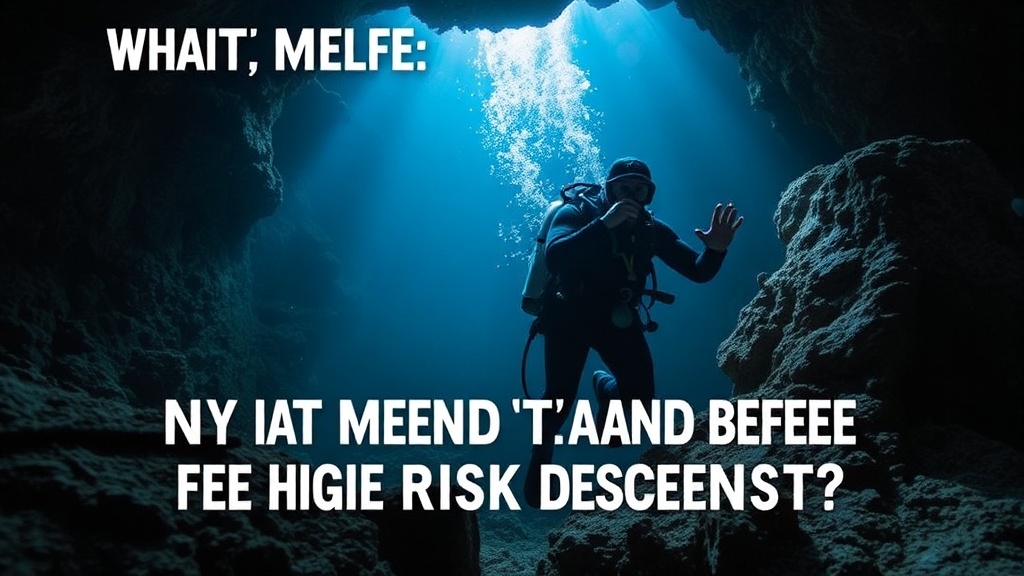
What Mental Training Do Cave Divers Need Before High-Risk Descents?

You're 40 meters below the surface, wedged into a limestone passage barely wider than your shoulders. The water is gin-clear—so clear it disorients. Behind you, the guideline stretches back toward daylight. Ahead, the cave narrows into darkness. Your heart rate spikes. You feel the first flutter of panic in your chest. This is the moment where mental preparation separates those who think clearly from those who make fatal mistakes. Cave diving isn't about bravado or physical strength—it's about maintaining absolute control over your mind when everything in your biology screams to flee.
Cave diving fatalities often share a common thread: the diver panicked. Equipment failures are rare compared to human error. The Divers Alert Network has documented hundreds of cave diving incidents, and the data consistently points to psychological breakdown as the primary cause of accidents—not equipment failure, not equipment malfunction. Understanding this reality changes how you prepare.
How Do You Train Your Mind to Stay Calm Underwater?
Mental training for cave diving operates on several levels—visualization, stress inoculation, and deliberate exposure to discomfort. Most serious cave divers spend more time preparing their minds than their gear. The preparation starts long before you touch water.
Visualization isn't fluffy self-help—it's practical rehearsal. Elite cave divers run mental simulations daily. They close their eyes and walk through worst-case scenarios: silt-out conditions where visibility drops to zero, primary light failure at 100 meters penetration, guideline breaks in restricted passages. They visualize their response in detail—the hand signals, the equipment checks, the measured breathing, the slow, methodical retreat to safety. This mental repetition builds neural pathways. When stress hits, you don't think—you react from programmed memory.
Stress inoculation takes this further. Military special operations teams use this technique, and it applies perfectly to cave diving. You deliberately expose yourself to controlled stress in training, gradually increasing intensity. Start with simple drills: practice mask removal and replacement in cold water. Progress to equipment failures in shallow, open water. Eventually, work up to complex scenarios—simulated out-of-gas emergencies in overhead environments with limited visibility. Each successful navigation of stress builds confidence and reduces the panic response.
Breathing control forms the foundation. Research on breathing techniques shows that controlled, diaphragmatic breathing activates the parasympathetic nervous system—literally calming the fight-or-flight response. Cave divers practice box breathing (four counts in, hold, out, hold) until it becomes automatic. This isn't just theory—it's survival. When your heart rate exceeds 120 beats per minute, fine motor skills deteriorate. Decision-making becomes erratic. Controlled breathing keeps you in the cognitive zone where you can actually solve problems.
What Physical Fitness Do You Actually Need for Cave Diving?
There's a misconception that cave diving requires the fitness of an elite athlete. It doesn't—but it does demand specific physical capabilities that most people ignore. General gym fitness translates poorly to the underwater environment. You need functional strength, mobility, and cardiovascular efficiency under load.
Carrying twin 12-liter tanks, multiple stage cylinders, and backup systems across rough terrain before a dive isn't glamorous—it's exhausting. Entry and exit points are often remote. You might hike 30 minutes through jungle with 40 kilograms of equipment. Core strength matters more than bicep size. Functional movement patterns—squatting, hinging, carrying—prepare you for the reality of cave diving logistics.
Underwater, efficiency trumps power. Every unnecessary movement burns gas, produces carbon dioxide, and stirs up sediment. Cave divers train for streamlined propulsion techniques—frog kicks, modified flutter kicks, helicopter turns that keep fins from hitting the ceiling or floor. These skills require hip mobility, ankle flexibility, and core stability. Yoga and swimming (particularly breaststroke with proper technique) develop these capabilities better than weightlifting ever will.
Cardiovascular fitness has a specific purpose: CO2 tolerance. Working hard underwater produces carbon dioxide faster than you can eliminate it. High CO2 levels trigger the urge to breathe, create headaches, and impair judgment. Regular aerobic training—running, cycling, swimming—expands your capacity to handle CO2 buildup. But there's a nuance: you need aerobic base fitness, not anaerobic power. Long, steady-state cardio sessions (45+ minutes at moderate intensity) build the mitochondrial density that delays CO2 accumulation.
Why Does Recovery Matter for Cave Diving Performance?
Cave diving imposes unique physiological stress. Long decompression obligations keep you underwater for hours. Cold water drains body heat. The mental concentration required is exhausting. Recovery isn't laziness—it's preparation for the next dive.
Sleep quality directly impacts in-water performance. Research consistently shows that sleep deprivation impairs risk assessment, reaction time, and emotional regulation—all critical for cave diving. Most serious cave divers maintain strict sleep hygiene, especially before major expeditions. This means 7-9 hours of quality sleep, consistent bedtimes, cool sleeping environments, and zero alcohol (which fragments sleep architecture despite making you feel drowsy).
Nutrition around dives requires planning. Heavy meals before diving increase CO2 production and create discomfort. Most experienced cave divers eat light, easily digestible foods—bananas, rice, simple carbohydrates—2-3 hours before submerging. Hydration matters enormously: dehydration thickens blood, impairs gas exchange, and increases decompression sickness risk. Many cave divers pre-hydrate aggressively, consuming 500ml of water per hour in the 4-6 hours before a dive.
Between dive days, active recovery works better than passive rest. Light swimming, walking, or yoga promote circulation without adding training stress. Contrast therapy—alternating hot and cold exposure—helps manage inflammation from equipment loading and cold water exposure. The science around cold water immersion suggests it can reduce muscle soreness and improve recovery markers, though individual response varies significantly.
Building Sustainable Practices
Cave diving isn't a sport you age out of quickly—many of the world's most accomplished cave divers are in their 50s and 60s. They stay in the game by respecting recovery, maintaining consistent (not extreme) fitness, and prioritizing mental sharpness over physical daring. The Mexican cenotes, Florida's springs, and Australia's Cocklebiddy Cave have been explored by divers who understood that sustainability beats intensity.
The commitment required is substantial. Mental training sessions of 20-30 minutes daily. Physical conditioning 4-5 times weekly. Recovery protocols that might seem excessive to casual divers. But the payoff is the ability to enter underwater cave systems with confidence—not the false confidence of ignorance, but the earned confidence of preparation. When you're deep inside the earth, following a thin guideline through passages that have claimed lives, that preparation is everything. There's no calling for help. There's only what you brought with you—and what you trained yourself to become.