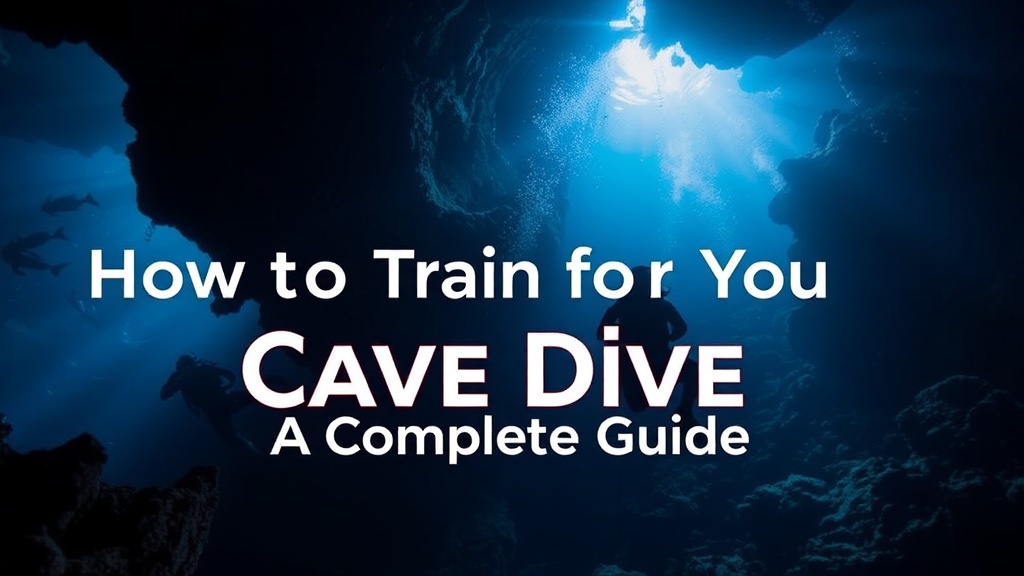
How to Train for Your First Cave Dive: A Complete Guide

This guide breaks down everything needed to prepare physically and mentally for a first cave diving certification. Cave diving demands a unique combination of technical skills, fitness conditioning, and psychological readiness that goes far beyond recreational diving. You'll learn the specific training protocols, equipment familiarity drills, and prerequisite certifications required to safely enter the underwater cave environment. Whether you're an experienced open-water diver eyeing the cavern zone or preparing for a full cave course in Florida's springs, the steps outlined here will set you up for success.
What Physical Fitness Level Do You Need for Cave Diving?
Cave diving requires cardiovascular endurance, core strength, and the ability to handle stressful situations without panicking. You don't need to be an elite athlete, but a baseline fitness level prevents exhaustion during long dives and helps manage the physical demands of carrying twin tanks through rough terrain.
Start with cardio training three times per week. Swimming is ideal (obviously), but cycling and rowing also build the lung capacity and stamina you'll need. Aim for 30-45 minute sessions at moderate intensity. The goal isn't peak performance—it's sustained output under load.
Strength training matters too. Focus on:
- Core muscles — stabilizes you in a horizontal trim position for extended periods
- Legs and glutes — powers finning technique and carries heavy gear to entry points
- Back and shoulders — supports double tank configurations and stage bottles
Here's the thing: fitness isn't just about the dive itself. Many cave sites—like those in Mexico's Riviera Maya—require walking 500+ meters through jungle with 100+ pounds of equipment. That 15-minute hike to the cenote entrance will gas you faster than the dive if you're not prepared.
Don't neglect flexibility. Yoga or regular stretching prevents cramps during long decompression hangs and helps you maneuver through tight restrictions. The cave doesn't accommodate stiff divers.
What Certifications Should You Complete Before Cave Training?
You'll need Advanced Open Water, Deep Diver, and Nitrox certifications as absolute minimums before enrolling in a cave course. Most reputable instructors (and the standards set by agencies like TDI/SDI and Global Underwater Explorers) won't accept students without this foundation—and for good reason.
Beyond those basics, consider these prerequisites:
- Technical diving fundamentals — Many cave programs require or strongly recommend a Tech Fundamentals or Intro to Tech course first. This teaches the precision buoyancy, trim, and propulsion techniques that cave diving demands.
- Drysuit certification — Most cave environments run cold. A drysuit isn't optional in 52°F Florida springs or European caves. Get comfortable with it before adding the mental load of overhead environments.
- Rescue Diver — Cave diving problems escalate fast. The problem-solving mindset from rescue training translates directly to managing line entanglements or silt-outs.
Worth noting: some agencies offer a "Cavern Diver" certification as a stepping stone. This limited-penetration course (maximum 1/6th of gas supply, always within sight of natural light) provides a taste of the environment without full commitment. It's money well spent.
The catch? Certification cards don't equal readiness. Instructors can (and do) refuse students who have the paperwork but lack the in-water control. Before your cave course, log at least 100 dives in varied conditions—night dives, low visibility, drift dives. Comfort underwater isn't certified; it's earned.
How Do You Train for the Technical Skills?
Cave diving technique breaks down into four core competencies: buoyancy control, propulsion methods, line handling, and emergency procedures. Each requires dedicated practice—often in a pool or open water—before attempting them in an overhead environment.
Buoyancy and Trim
Cave divers maintain a perfectly flat horizontal position. Any angle changes disturb silt, reducing visibility to zero in seconds. Practice this in a pool first. Use a Dive Rite or Halcyon wing system with proper weight distribution. The goal: hover at a fixed depth without moving your hands or flapping your fins.
Start with simple drills. Hold a position for five minutes. Then try it while looking behind you. Then add task-loading—adjusting your light, simulating regulator switches. If you can't maintain trim while distracted, you're not ready for a restriction.
Propulsion Techniques
The flutter kick—standard in open water—stirs up sediment. Cave divers use modified kicks:
| Technique | Best For | Practice Method |
|---|---|---|
| Modified Flutter | Open water exits, low-silt areas | Short, controlled strokes from the hips |
| Frog Kick | Standard cave travel | Bend knees 90°, power from hip flexors |
| Modified Frog | Low ceilings, tight spaces | Smaller amplitude, knees tucked |
| Helicopter Turn | 180° turns in confined areas | Rotate using fins only, no hand contact |
| Back Kick | Repositioning without turning | Reverse thrust using modified flutter motion |
Master these in a pool with a buddy watching from below. Film yourself—the difference between what you feel and what you actually do is often surprising.
Line Handling
The guideline is your lifeline. Literally. In zero visibility, it's the only path to the surface. Practice deploying and following line in a pool first. Learn to tie a safe tie-off (a secure loop around a fixed point) without looking. Practice switching from main line to jump line and back.
Simulate emergencies. Close your eyes and find the line. Practice the "lost line" drill—dropping a gap reel, securing it, and searching in a circle until you reconnect. These aren't skills you want to figure out for the first time when silt reduces visibility to arm's length.
Stage Bottle Management
Most cave dives require additional gas staged along the route. Practice donning and doffing stage bottles while maintaining trim. Learn to clip them securely so they don't drag (silt) or dangle (entanglement hazard). The Dive Rite stage rigging kit is widely used—get familiar with that specific system before your course.
What Equipment Do You Need to Master Beforehand?
Cave diving runs on redundant, simplified equipment. You need to operate every piece blindfolded—because at some point, you might be.
Start with these non-negotiables:
- Double tanks — Typically HP100s or HP133s, manifolded together with an isolation valve. Practice shutting down either post or the isolator in under 10 seconds.
- Long-hose primary regulator — A 7-foot hose allows you to donate gas to a teammate while sharing a single file line. Route it properly—under the right arm, around the neck, secured with a necklace.
- Primary and backup lights — Canister lights like the Halcyon Focus 2.0 or Dive Rite LX20 for primary, with two smaller backups. If your primary fails, you need immediate access to backup without fumbling.
- Reels and spools — Primary reel for the main line (typically 400+ feet of #24 line), safety spools for gaps and jumps.
- Drysuit — With proper undergarments for water temperature. The Fourth Element Argonaut or Dive Rite 905 are proven choices.
That said, gear familiarity trumps gear quality. A $3,000 canister light helps nobody if you can't find the switch in a silt-out. Spend pool time wearing your full cave rig. Do simple tasks—tying knots, writing on a slate, operating your backup lights. Build muscle memory.
"The cave is the classroom, but the pool is where you learn to pay attention." — Common instructor saying
How Do You Prepare Mentally for Cave Diving?
The psychological preparation is arguably more important than the physical. Cave diving means accepting that you cannot swim directly to the surface. That reality triggers something primal in most people.
Start with visualization. Close your eyes and picture following a line into darkness. Imagine your primary light failing—total blackness. Walk through your response: activate backup light, confirm it's working, stow the failed primary, continue the exit. Mental rehearsal builds confidence faster than any physical drill.
Practice stress inoculation. Do training dives that deliberately create mild discomfort—cold, task-loading, simulated failures. The goal isn't to traumatize yourself; it's to experience stress responses (improved heart rate, narrowed focus) and learn to think through them.
Study accident reports. The DAN (Divers Alert Network) publishes detailed analyses of cave diving fatalities. They're not sensational—they're instructional. Common threads emerge: inadequate training, failure to run continuous guideline, poor gas management. Learn from others' mistakes so you don't repeat them.
The catch? Respect isn't the same as fear. A terrified diver makes poor decisions. A respectful diver follows protocols precisely because they understand the consequences. Your goal is the latter.
Where Should You Do Your First Cave Course?
Florida's panhandle remains the global hub for cave training. The springs offer clear water, forgiving limestone, and a strong instructor community. High Springs and Marianna host dozens of cave diving operations—Extreme Exposure and Blue Grotto are well-regarded for training.
Mexico's Riviera Maya has surged in popularity too. The cenotes offer warmer water and spectacular formations, but the diving is often more complex—deeper, more silty, with stronger flow in some systems. Save Mexico for your second cave course, not your first.
Plan for a minimum five-day course for Cavern/Cave 1, plus preparation time. Don't book your flight home for the evening after your final dive. Build in contingency days for weather, equipment issues, or simply needing more practice time. Instructors don't pass students on schedules—they pass them on demonstrated competency.
Between certification levels, get experience. Log 25+ cave dives at your current level before advancing. Dive different sites, different conditions, different buddies. Build judgment. The certificate gets you in the water; experience keeps you safe there.
Cave diving isn't a sport you rush into. The training path takes months—sometimes years—of dedicated preparation. But that investment pays off in experiences few humans ever have: floating through cathedral-sized chambers, following ancient limestone passages, existing briefly in a world that was never meant for human eyes. Start your preparation now. The caves have waited millions of years. They'll wait for you to be ready.
Steps
- 1
Build Your Foundational Diving Skills and Certification
- 2
Develop Physical Fitness and Breath Control
- 3
Master Navigation Techniques and Emergency Protocols