Essential Cave Diving Training: From First Cavern to Full Penetration

This guide breaks down the complete cave diving certification path—from that first tentative cavern dive to full overhead environment penetration. Whether you're an open water diver curious about the overhead or a technical diver ready to commit, you'll find specific training requirements, realistic timelines, gear costs, and the hard truths about risk management that training agencies sometimes gloss over.
How long does cave diving certification take?
Most students need 8–14 days of intensive training spread across 3–6 months to progress from Cavern Diver to Full Cave Diver. That said, rushing this timeline invites disaster. The Technical Diving International (TDI) curriculum—the most widely recognized cave diving certification worldwide—structures training in three distinct phases, and each demands both water time and significant surface intervals for skill absorption.
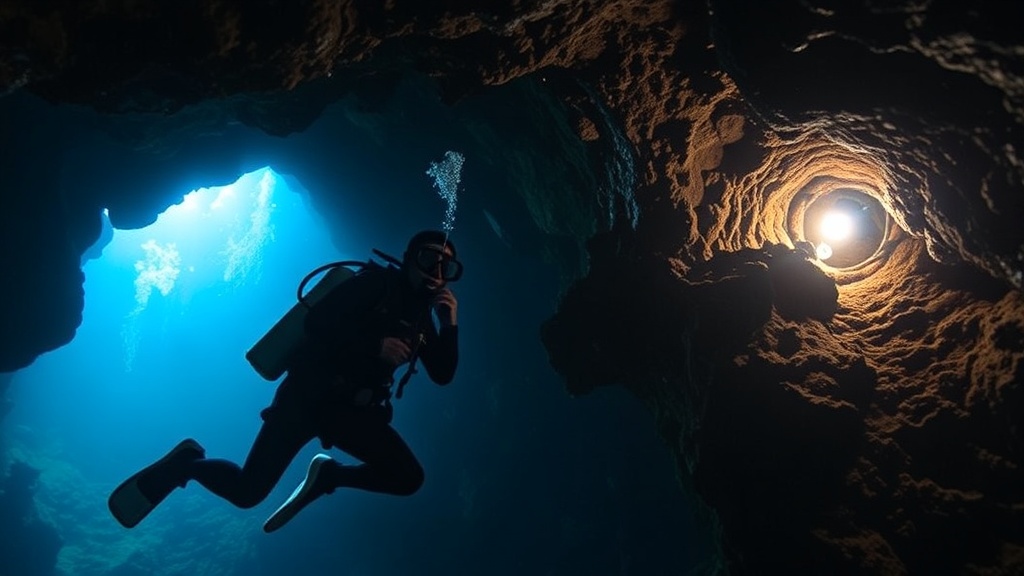
The Cavern Diver course typically runs 2–3 days. You'll learn line following, lost line procedures, and gas management in the "cavern zone"—the area within 130 linear feet of surface and within natural light. It's a teaser. Many divers complete this and wisely stop there.
Intro to Cave Diver adds another 3–4 days. Now you're penetrating beyond the light zone, learning jump and gap procedures, managing multiple tanks, and dealing with permanent cave lines. Here's the thing: most instructors won't sign off on this until you've logged 25+ cavern dives. That's not bureaucracy. It's survival.
Full Cave Diver represents the final 4–5 day push. Complex navigation, survey techniques, stage cylinder management, and actual decompression procedures in the overhead. The catch? You need 50+ logged cave dives before most quality instructors will even discuss this level.
What gear do you need for cave diving training?
You'll need a complete technical diving setup—no exceptions, no shortcuts. Cave diving demands redundancy for everything because there's no direct ascent to the surface when silt hits the fan.
| Equipment Category | Specific Requirements | Approximate Cost (USD) |
|---|---|---|
| Primary Regulators | Two complete first/second stage sets (balanced diaphragm preferred) | $1,200–$1,800 |
| Primary Lighting | 10,000+ lumen canister light (Halcyon Focus 2.0, Dive Rite LX20) | $800–$1,400 |
| Backup Lighting | Two minimum 1,000 lumen handhelds (Underwater Kinetics SL4, Bigblue AL1200NP) | $200–$400 |
| Exposure Protection | 7mm wetsuit or drysuit (depending on location) | $400–$2,500 |
| Cylinder Configuration | Sidemount (preferred) or twinset with isolator manifold | $800–$1,600 |
| Reels & Line | Primary reel (400+ ft), safety spools, jump/gap reels | $300–$600 |
Worth noting: sidemount configuration has largely overtaken backmount twins in modern cave diving. The
Training focuses heavily on "silt-out" scenarios—when disturbed sediment reduces visibility to absolute zero. You'll practice touch-contact communication, line following with eyes closed, and emergency procedures while essentially blind. It's unnerving. Many capable open water divers wash out during this phase. There's no shame in that. Cave diving requires a specific psychological profile—calm under pressure, methodical, willing to abort when conditions deteriorate.
Worth noting: the National Speleological Society's Cave Diving Section maintains accident reports dating back decades. The patterns are depressingly consistent—divers exceeding training, ignoring gas rules, or penetrating alone. Quality instructors hammer these lessons until they're reflexive.
Where should you train?
Location matters more than most beginners realize. Florida's springs—Ginnie Springs, Peacock Springs, Little River—represent the gold standard for North American cave training. The water's warm (72°F year-round), visibility typically exceeds 100 feet, and the cave systems range from beginner-friendly to genuinely extreme. Ginnie Springs specifically offers the "Devil's Ear" and "Devil's Eye" systems—perfect progression sites with established lines and known hazards.
Mexico's Yucatán Peninsula offers an entirely different training environment. The cenotes—natural sinkholes connecting to vast underwater cave networks—provide crystalline visibility but introduce new challenges: hydrogen sulfide clouds (toxic gas layers), haloclines (salt/freshwater mixing zones that destroy visibility), and complex navigation through decorated passages. Training here costs more but produces divers comfortable with variable conditions.
That said, don't chase exotic locations for initial certification. The best training happens close to home—or close enough to revisit sites repeatedly. You need repetition. You need to know that specific cave's quirks, its seasonal flow changes, its silt pockets. A one-week "zero to hero" trip to Mexico might get you certified. It won't make you a cave diver.
The mental game
Physical fitness matters—cave diving demands cardiovascular conditioning, strength for equipment handling, and the flexibility to maneuver through restrictions. But the mental component separates those who complete training from those who thrive.
You'll learn to embrace "boredom." Cave diving isn't exciting in the traditional sense. Excitement means something went wrong. The goal is methodical, repetitive, almost meditative progress through the overhead. Check gas. Check buddy. Check line. Check lights. The rhythm becomes automatic—or you become a statistic.
Decision-making under stress gets tested constantly. An instructor might simulate a primary light failure at maximum penetration. Or a simulated out-of-gas scenario. Or a lost line drill. Your heart rate spikes. Your body wants to bolt. Training teaches you to override that instinct, to think through the problem, to execute the solution step by step.
Many experienced cave divers describe the experience as "technical meditation." There's beauty in the restriction, in the knowledge that you're operating at the edge of human capability. The limestone passages—formed over millennia by acidic groundwater—don't care about your certification card or your expensive gear. They simply exist. Your training allows you to visit, briefly, and return to tell the story.
Start with Cavern. Log those dives. Find an instructor who fails students (that's actually a good sign—means they have standards). Join your local NSS-CDS or Global Underwater Explorers chapter. Dive with divers better than you. Stay humble. The caves will wait. They've been there for thousands of years. Your job is ensuring you're competent enough to join them—and wise enough to know when to turn the dive.