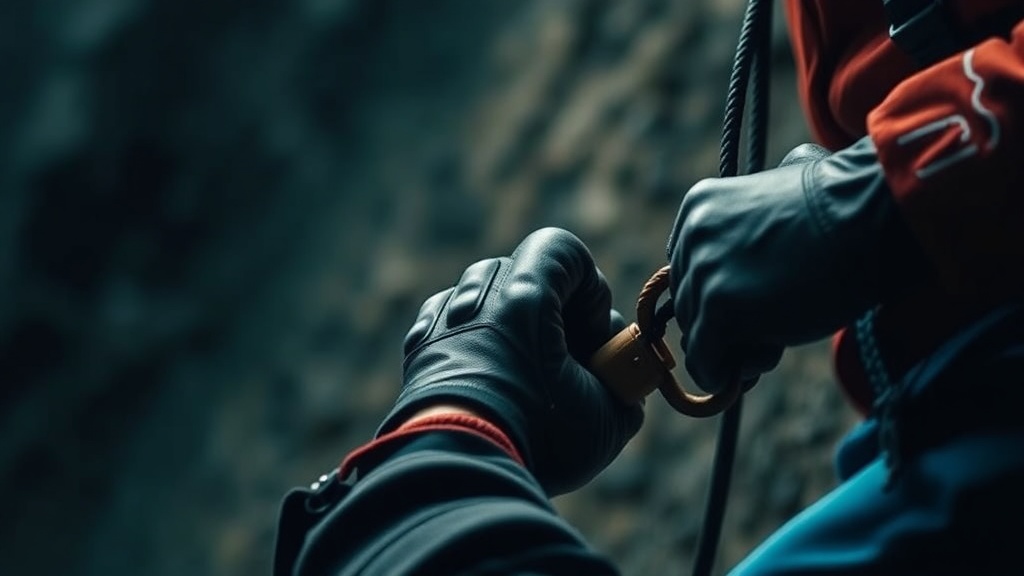
Building Grip Strength for Technical Gear Management

This post covers the specific methods for developing hand and forearm strength required to handle heavy technical gear, manage line deployment, and maintain control in high-flow environments. You'll learn why grip endurance is just as important as lung capacity when you're deep in a cave system.
Why does grip strength matter for cave diving?
In a standard recreational dive, you might not think twice about your hands. But in cave diving, your hands are constantly working. You're managing heavy steel cylinders, pulling yourself through tight restrictions, and handling high-pressure hoses. If your grip fails during a critical moment—like a line deployment or a gear adjustment—you're in trouble. It's not just about strength; it's about endurance. You need to be able to manipulate your gear without your hands cramping up or losing dexterity.
When you're stuck in a tight squeeze, you might be relying on your grip to pull yourself through a narrow passage. If your forearms burn out because you haven't trained them, your movement becomes jerky and inefficient. This inefficiency leads to higher gas consumption (which we've talked about before) and unnecessary stress. You want your hands to be an extension of your body, not a source of fatigue. Developing that strength helps you maintain fine motor control even when your heart rate is up or the environment gets tight.
How do I train my grip for technical diving?
You can't just go out and lift heavy weights and expect it to translate to the cave. You need a mix of isometric holds and functional movements. Here is a breakdown of how to approach your training:
- Isometric Holds: Hold a heavy dumbbell or a barbell in a static position. This mimics the strain of holding a heavy tank or a piece of gear in place.
- Farmer Carries: Grab two heavy kettlebells and walk. This is one of the best ways to build total-body stability alongside grip endurance.
- Finger Dexterity Drills: Use small, weighted objects or even a specialized grip trainer to keep your fingers agile. You need to be able to manipulate small valves or clip on a reel even when your hands are cold.
Don't just focus on the heavy stuff, though. Strength is useless if you lose dexterity. Practice tasks that require precision—like tying knots or manipulating small tools—while your forearms are already tired. This simulates the feeling of being at the end of a long penetration when your muscles are already screaming. If you can't do it when you're tired, you won't be able to do it in the cave.
What gear helps build hand endurance?
You don't need a full gym to get better, but having a few tools can speed up the process. A simple grip strengthener (the kind with adjustable tension) is great for quick sessions at home. If you're traveling, a set of resistance bands can work wonders for forearm mobility and strength.
One way to make your training more relevant is to incorporate the gear you actually use. If you're using a specific type of reel or line, practice your deployment drills with a bit of added resistance. It sounds tedious, but it builds the muscle memory you'll need. You might also consider looking at resources from the Divers Alert Network for more on the physical demands of technical diving and safety protocols. Staying physically prepared is a part of your safety kit, just like your lights or your computer.
How can I avoid forearm cramps during a dive?
Cramping is a nightmare when you're under pressure. It often stems from a lack of both strength and mobility. If your forearms are constantly tight, you're more likely to hit a wall. To combat this, incorporate regular stretching into your recovery routine. Focus on the extensors (the muscles on the back of your forearm) just as much as the flexors (the muscles on the palm side).
A good way to check your progress is to see how long you can hold a standard piece of gear without your hands shaking. If you find yourself struggling with basic movements after a dive, you're likely overtraining or not recovering enough. Remember, strength building happens during rest, not just during the workout. A study on physical endurance and grip strength shows that consistent, varied training is better than sporadic heavy lifting. Keep your routine varied to avoid repetitive strain injuries.
Check your tension frequently. If you're constantly gripping your regulator or your manifold too tightly, you're wasting energy. Learn to use a lighter touch when you aren't actively performing a task. This helps preserve that precious energy for when you really need it. A well-trained grip allows you to be decisive and controlled, rather than frantic and clumsy. This is the difference between a controlled exit and a panicked one.
If you want to dive deeper into the physical requirements of the sport, check out the PADI technical diving resources to see how different disciplines demand different physical traits. Whether you're doing sidemount or backmount, your hands are your primary tools for survival. Treat them with respect.