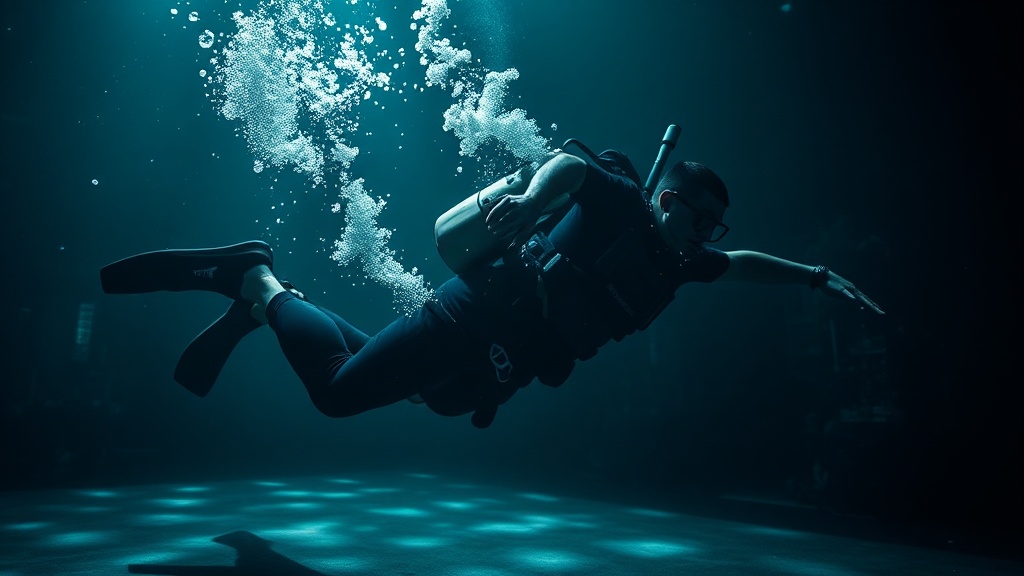
Building Core Strength for Heavy Sidemount Configuration

The physical reality of heavy gear in tight spaces
Imagine you're midway through a technical dive in a tight restriction. Your sidemount configuration, loaded with heavy tanks and extra tools, feels like a lead weight pulling your center of gravity downward. Every time you try to trim your position to avoid hitting the ceiling, your core muscles scream. You realize that your buoyancy control isn't just about air in your BCD—it's about the muscular stability required to hold a heavy, asymmetrical load in a horizontal position. This post covers why core stability is the backbone of technical diving and how to build a body that can handle the physical demands of heavy configurations.
When you're diving sidemount, your weight distribution is inherently uneven. The tanks sit at your sides, shifting your center of mass. If your core is weak, you'll find yourself constantly fighting to stay level. This constant micro-adjustment leads to rapid fatigue. Fatigue is a dangerous variable in cave diving; a tired diver makes mistakes, and mistakes in a cave can be fatal. We aren't just talking about looking good in a wetsuit—we're talking about the ability to maintain trim under pressure.
Why does core strength matter for technical divers?
The primary reason is trim. In a perfect world, your buoyancy and trim are controlled by your lungs and your BCD. In the real world, especially when carrying heavy tanks or maneuvering through tight passages, you rely on your abdominal and back muscles to maintain a streamlined profile. If your core collapses, your legs might drop, or your torso might tilt. This change in geometry increases drag and increases the risk of hitting a ceiling or an obstacle.
Furthermore, a strong core provides a stable platform for your limbs. When you need to reach for a tool or adjust a valve, a strong midsection ensures that your movement doesn't disrupt your overall buoyancy. You've likely seen divers who look "clumsy" underwater—that's often a lack of midsection stability. A stable core allows for precise, controlled movements even when your gear is heavy and awkward.
How can I improve my stability under heavy loads?
To build a body that can handle the weight of technical gear, you need to move beyond basic sit-ups. You need functional stability training. This means exercises that challenge your body to remain stable while your center of gravity shifts. A great place to start is with stability ball work or unilateral movements. Unilateral training (working one side of the body at a time) is particularly effective because it mimics the asymmetrical weight of a sidemount setup.
Consider these specific training methods:
- Planks with variations: Don't just hold a standard plank. Try side planks or "mountain climbers" to engage the obliques, which are vital for managing the weight of tanks on your hips.
- Anti-rotation exercises: Exercises like the Pallof Press are excellent. They teach your body to resist rotation—a skill you'll use constantly when maneuvering through tight gaps.
- Weighted carries: Carrying heavy dumbbells or kettlebells in a "farmer's walk" builds the foundational strength needed to support heavy gear over long durations.
For those looking to understand the physiological demands of high-level athletic performance, the Penn State Health resources on physical conditioning offer great insights into how the body handles stress and load.
What exercises build the best underwater trim?
The goal isn't just strength; it's endurance. You need to be able to hold a position for a long time. This is where isometric training comes in. Isometrics involve holding a position under tension without moving. This mimics the constant, low-level effort of maintaining trim in a current or while carrying heavy tanks.
A solid routine should include:
- Dead Bugs: This is a fundamental movement for core stability and coordination. It helps you learn to move your limbs while keeping your spine neutral.
- Bird-Dogs: This targets the posterior chain (your back and glutes), which is essential for keeping your legs elevated in a horizontal trim.
- Weighted Lunges: These build the leg and hip strength needed to push through heavy currents or move through tight restrictions.
If you want to track your progress and understand how your body responds to intense training, checking out data from platforms like TrainingPeaks can help you monitor your physiological output and recovery phases.
Remember, your training doesn't end at the dive site. The work you do in the gym directly impacts your safety and efficiency in the water. A diver with a strong, stable core is a diver who can focus on navigation, gas management, and situational awareness, rather than struggling just to stay level. Treat your core training with the same seriousness you treat your buoyancy drills. It's the foundation of everything you do under the surface.